


 334 Foxwell road Upper Coomera

Finding the right home and the right support is one of the biggest decisions a person with disability and their family will make. Quality supported independent living in Brisbane participants can rely on offers more than a place to live. It provides a safe, respectful environment where each person can grow, make their own choices and stay connected to their community.
When you compare options, choosing a reputable SIL provider Brisbane families trust helps ensure the support is tailored, consistent and focused on real outcomes. This guide covers everything you need to know before you decide.
What Is Supported Independent Living?
Supported independent living (SIL) refers to help with daily tasks and personal care for people who need support in their own home. It is funded through the NDIS for eligible participants and covers the support workers who assist with day-to-day living, not the cost of rent or groceries.
The aim is to build independence. Support may include help with meal preparation, personal care, medication prompts, household tasks, and developing life skills. Every plan is different, so the level of support is shaped around the individual.
How Is SIL Different From Specialist Disability Accommodation?
These two terms are often confused, but they are separate parts of NDIS funding:
- Supported independent living: Funds the daily support and care provided in the home
- Specialist disability accommodation (SDA): Funds the design and construction of specially built homes for people with extreme functional impairment or very high support needs
A participant may receive one, both, or neither, depending on their goals and assessed needs. A knowledgeable provider can explain how each fits into your plan.
Who Can Benefit From Supported Independent Living?
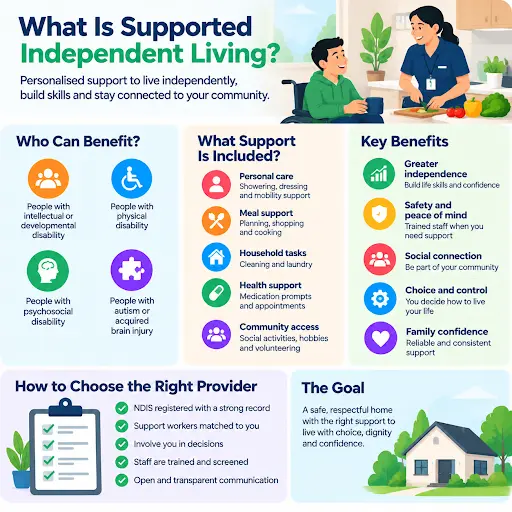
SIL suits adults who need regular support to live in their own home but want to keep as much independence as possible. It can help people with:
- Intellectual or developmental disability
- Physical disability
- Psychosocial disability
- Acquired brain injury
- Autism spectrum needs
Eligibility depends on your NDIS plan and assessment. The NDIA reviews whether SIL is reasonable and necessary based on your goals, support needs, and living situation.
Contact Abloom Care Services now to learn how we can create a personalised support plan that fits your needs.
What Services Are Included in SIL?
A good provider offers flexible, person-centred support. Common services include:
- Personal care: Showering, dressing, grooming and mobility assistance
- Meal support: Planning, shopping and cooking healthy meals together
- Household tasks: Cleaning, laundry and home organisation
- Health support: Medication reminders and appointment assistance
- Life skills coaching: Budgeting, travel training and communication
- Community access: Social outings, hobbies and volunteering
Participants searching for disability accommodation Brisbane options often want a home where daily routines feel natural, and choices remain in their hands.
What Are the Benefits of Supported Independent Living?
The right arrangement improves quality of life in many ways:
- Greater independence: Skills develop through practice and encouragement
- Safety and peace of mind: Trained staff respond quickly when help is needed
- Social connection: Housemates and community activities reduce isolation.
- Choice and control: Participants decide how they spend their time and who supports them
- Family confidence: Loved ones know support is reliable and consistent
How Do You Choose the Right SIL Provider?
Not all providers deliver the same quality, so take time to compare. Ask each one these questions:
- Are they a registered NDIS provider with a strong compliance record?
- Do they match support workers to your personality, culture and interests?
- How do they involve you in decisions about your home and routines?
- Are staff trained, screened and supported with ongoing development?
- How do they handle feedback, complaints and changes to your plan?
Locally based teams understand community services, transport, health networks and local activities. This knowledge helps participants settle in faster and build meaningful connections. If you are searching for NDIS support near me, prioritise providers who offer home visits and open conversations before any commitment.
What Does the Process of Moving Into SIL Look Like?
The journey is easier when you know the steps:
- Check your plan: Confirm SIL funding is included or request a plan review.
- Meet providers: Compare services, values, and availability.
- Tour the home: Meet potential housemates and support staff.
- Create a support plan: Set goals, routines and preferences together.
- Transition gradually: Trial visits or overnight stays help everyone feel comfortable.
- Review regularly: Adjust support as skills and needs change.
What Trends Are Shaping the Sector?
Disability support continues to evolve, and forward-thinking providers are adapting:
- Person-centred planning: Goals and choices drive every decision
- Assistive technology: Smart home devices and monitoring tools boost independence
- Small, home like settings: Smaller households feel warmer and more personal
- Stronger quality standards: Providers face closer oversight and higher expectations
- Community inclusion: Support focuses on participation, not just care
Final Thoughts
Supported independent living gives people with disabilities the chance to live with dignity, choice, and confidence. By understanding your funding, asking the right questions, and choosing a caring, transparent provider, you can find a home and support team that truly fits.
Book a home tour with Abloom Care Services and meet the team that could help you live with confidence and independence.
Who is eligible for SIL funding?
Eligibility depends on your NDIS plan and whether SIL is considered reasonable and necessary for your goals and support needs.
Does SIL cover rent and food?
No. SIL funds support workers only. Rent, groceries and utilities are paid separately by the participant.
What is the difference between SIL and SDA?
SIL funds daily support, while SDA funds specially designed housing for people with very high support needs.
Can I choose my housemates?
Good providers involve you in the decision and consider compatibility, interests and personal preferences.
Can I choose my support workers?
Yes. Many providers work with you to match workers based on personality, skills and cultural needs.
How do I apply for SIL?
Speak with your support coordinator or NDIS planner to request an assessment or include SIL in your plan.
Can family and friends visit the home?
Yes. Participants can host visitors and stay connected to family, friends and community.
What happens if I am unhappy with my provider?
You can raise concerns directly, lodge a complaint or change providers at any time.
How long does it take to move into SIL?
Timeframes vary, but planning, meetings and transition steps usually take several weeks to a few months.
Ready to Find the Right Support With Abloom Care Facility Services?
Call Abloom Care Services today to book a friendly, no-obligation conversation about your living and support goals.
